
Melbourne has a way of making you want things. The laneway restaurants. The wine lists. The venues with 120-year-old chapel chapels and waterfalls in the garden and views over the Yarra Valley that you could genuinely stare at for hours. It’s a city that rewards aesthetic ambition, which is beautiful, and also expensive.
In 2026, Victorian couples are spending an average of $39,000–$40,000 on their weddings, among the highest in the country. Premium venue demand is fierce. Popular Saturday dates in the Yarra Valley and on the Mornington Peninsula book out 18 months in advance. And with supplier costs rising across the board — freight, catering, floristry — the final invoice almost always surprises upward.
Here’s the thing nobody in the wedding industry is rushing to tell you: almost all of those costs are primarily driven by one variable. Guest numbers. And guest numbers are, by and large, something you can choose.
So we want to make the case — warmly, honestly, and with full acknowledgment that this is easier said than felt — for the smaller Melbourne wedding. Not the sad compromise wedding. The genuinely extraordinary, wildly beautiful, ‘I can’t believe this is our life’ wedding, just with fewer chairs.
The ‘bigger is better’ myth nobody is talking about
Here’s something the wedding industry doesn’t love to admit: a bigger wedding doesn’t actually produce a better experience. It produces a more complicated one. More people means more seating charts, more dietary requirements, more obligation invitations, more of your day spent doing a loop of the room like a very well-dressed flight attendant, making sure everyone is okay.
What it often doesn’t mean is more time with the people you love. There’s a particular bittersweet moment that many couples describe — usually about 11pm, shoes off, slightly dishevelled — when they realise they barely spoke to their best friend all night. Or that the speech from the friend they actually wanted to hear from got cut for time. Or that they spent the most photographed hour of the day smiling through small talk with a cousin they haven’t seen in eight years.
A smaller wedding doesn’t have those problems. When your guest list is the people who genuinely matter, everyone gets a seat at the table, literally and figuratively.
What does ‘smaller’ actually mean?
Let’s be clear: this isn’t about eloping in secret or having a sad little ceremony with two witnesses and a registrar (though honestly, if that’s your thing, we love it for you). ‘Smaller’ is a spectrum.
A micro wedding typically sits at 20–50 guests. An intimate wedding might be 50–80. Both are still proper weddings — with a ceremony, a celebration, food, dancing, all of it — they just skip the hundred-plus guest list that’s often less about love and more about logistics, family politics and the feeling that you ‘should.’
And here’s the thing about the ‘should’: most of it was invented by an industry that makes more money when you spend more money. (We say this with love, as someone who works in that industry.)
The money reality, and what to do with it
Let’s talk numbers, because ignoring them is not mindful, it’s just avoidance. Australian couples are currently spending an average of $35,000–$40,000 on their wedding. Most overshoot their own initial budget by around 18 per cent. And 84 per cent of couples believe a 2026 wedding costs significantly more than it would have just two years ago, because it does.
Freight and fuel costs have pushed up florists. Supply chain pressure has hit caterers. Venue hire fees have climbed alongside everything else.
Here is what happens when you go smaller: Catering costs drop significantly. In Australia, catering typically runs $150–$300 per head. That’s the difference between $30,000 for 120 guests and $10,000 for 60. The maths matters. Venue hire drops, many of the country’s most stunning properties have micro wedding or exclusive-use packages that are a fraction of the cost of a traditional Saturday in peak season. And here is the genuinely lovely part: you can redirect that money into the things that actually make a day feel special. An exceptional photographer. A brilliant band or a guitarist whose music fills the room. A menu where every single dish is extraordinary. A honeymoon you’ll still be talking about in twenty years. A house deposit.
That last one is not a joke. The average Australian wedding cost is, depending on your state, equivalent to a 10 per cent deposit on a property in some markets. Just something to gently place in front of you.
The ‘tech detox’ wedding: do you actually need all of this?
A smaller wedding is also a natural invitation to audit something couples rarely question: how much digital infrastructure does your wedding actually need? The wedding-website-QR-code-digital-RSVP pipeline has become so normalised that most couples set it all up without ever asking why.
Think about it honestly. A wedding website exists to share logistics with guests. But your guests are adults with phones who are capable of receiving a beautifully worded email — or, revolutionary concept, a phone call. A QR code gallery sounds lovely until you realise you’re essentially inviting every guest to simultaneously post your wedding photos before you’ve even chosen your favourites. And sharing your full wedding details with a third-party platform means your most personal day lives on a server somewhere you have no control over.
None of this is wrong, exactly. But it’s worth asking: who is this for? If a text RSVP feels more personal (because it is — it’s a direct conversation, not a form submission), use that instead. If your venue has beautiful signage you can photograph and text to guests, that’s enough. Less digital noise means more of your story stays yours.
We’ll have a full article on the mindful approach to wedding tech coming soon, because this topic deserves its own deep dive.
Connection over content: what people actually remember
Ask anyone who has been to a truly memorable wedding what they remember most, and they will rarely say the centrepieces. Or the favours. Or the signature cocktail name. What they remember is dancing with someone they haven’t seen in years. A speech that made them cry in the good way. The moment the couple looked at each other during the vows and the whole room went quiet. Sitting at dinner next to someone fascinating and losing track of time.
These moments don’t scale with budget. They scale with intentionality. And with a smaller guest list, they become more likely, not less.
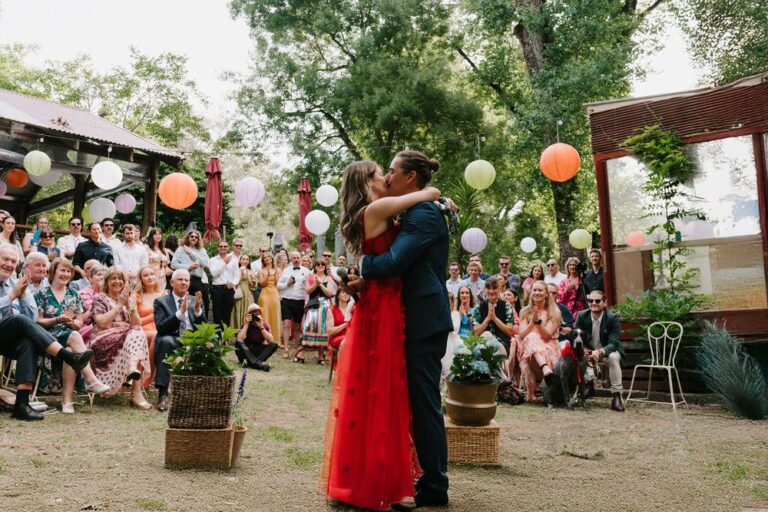
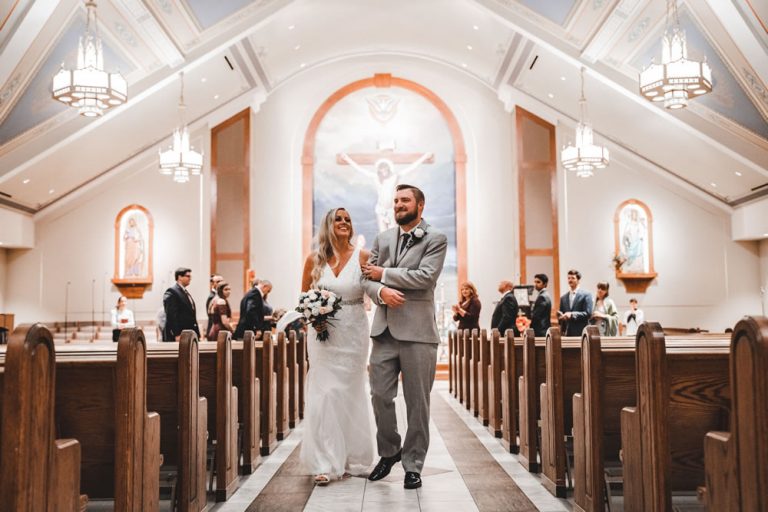
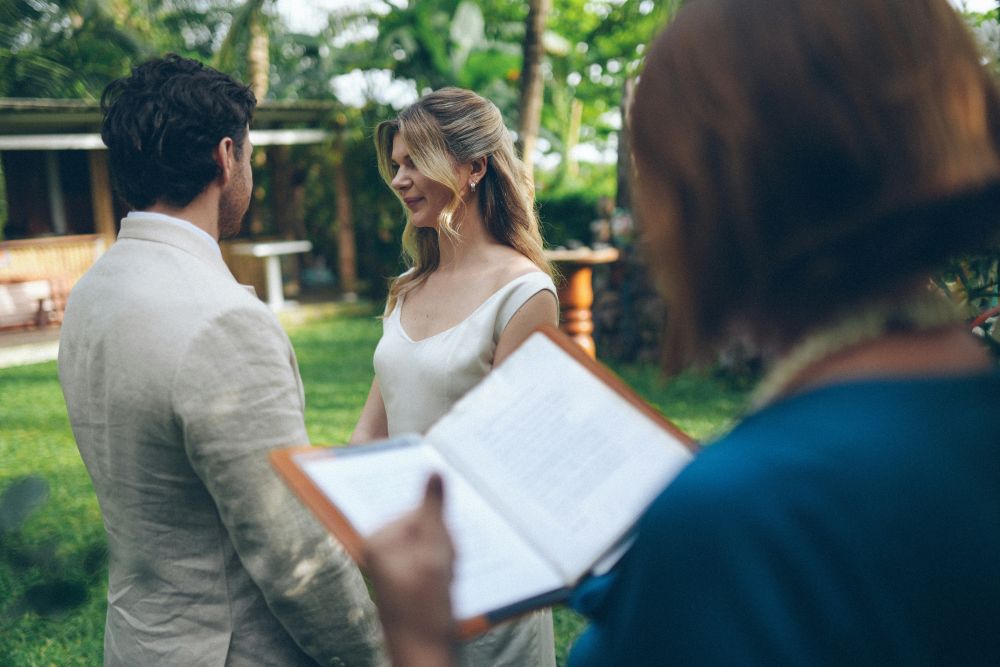
When your seating chart has 40 people on it instead of 140, you can actually think about who should sit next to whom. When your ceremony has 30 witnesses instead of 150, the intimacy isn’t a compromise. It’s the point.
The guest guilt spiral, and how to get out of it
Here is the conversation most couples are having quietly, usually at about 10pm when they’re staring at a guest list that’s doubled in size since they started:
‘We have to invite the Hendersons, they invited us to their wedding.’ ‘I know, but if we invite them we have to invite the whole work team.’ ‘And then Mum will be upset if we don’t include the cousins.’ ‘Right, so now we’re at 130 people, how did this happen?’
The obligation spiral is real, and it is the single biggest driver of wedding budgets blowing out across Australia. Every ‘we probably should’ guest adds cost, complexity, and dilutes your day.
Here is a gentle reframe: the people who truly love you will be delighted to celebrate with you, in whatever form that takes. A post-wedding party or a dinner a few weeks later is a beautiful way to celebrate more broadly, with none of the pressure of the wedding day itself. It gives people who weren’t there something to look forward to. And it gives you the wedding day you actually wanted.
What a smaller wedding actually looks and feels like
Before the naysayers say it: small does not mean sparse. It does not mean budget photocopier paper invitations and a sausage sizzle in a park (again, we would attend this, it sounds wonderful, but we understand it’s not for everyone).
A smaller wedding can still be:
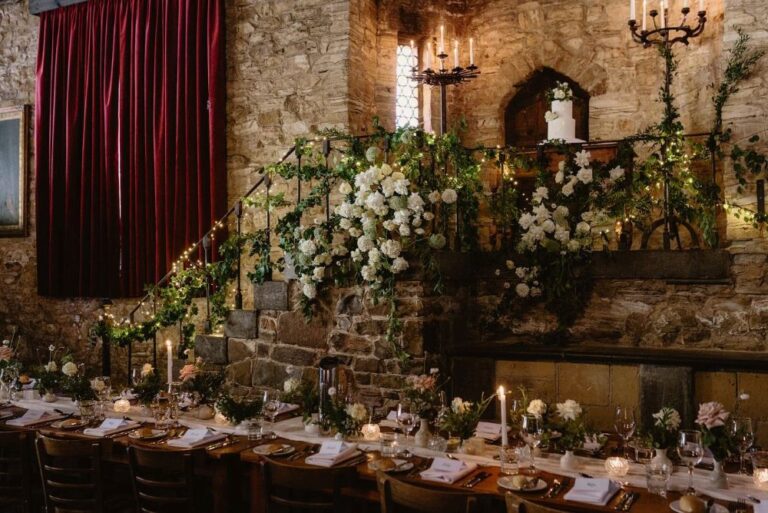
Wildly beautiful. Some of Australia’s most stunning properties — private estates, boutique wineries, heritage homesteads — actively prefer smaller guest lists because they can deliver a more personalised, elevated experience. You get exclusive use. You get the run of the property. You get the chef’s full attention.
Deeply personal. When every detail is chosen for 40 people rather than 150, the personalisation becomes extraordinary. The flowers your grandmother grew. The playlist built from songs that actually mean something to you. The menu that reflects where you both came from.
Genuinely fun. Smaller weddings consistently produce better dancing. (Counterintuitive but almost universally true, there’s a critical mass theory here involving knowing everyone on the dance floor and the absence of obligation guests who leave at 9pm.)
Doing it beautifully in Victoria
The Yarra Valley is, objectively, one of Australia’s most romantic landscapes, and it happens to be 45 minutes from Melbourne’s CBD. The valley’s over 80 wineries include estates that have specifically built their weddings offering around intimate celebrations, enjoy exclusive property use which means every detail of a 40-person day gets the full attention of their team.
But Melbourne’s intimate wedding scene isn’t only in the valley. The city’s inner suburbs have produced some genuinely brilliant small-wedding venues: an entire restaurant in Collingwood or Fitzroy, a private dining room with an extraordinary wine list, a heritage building in Carlton where the architecture does most of the work. These are weddings that feel like the best dinner party you’ve ever been to, because that’s essentially what they are.
The Dandenong Ranges and Mornington Peninsula offer a third character entirely: lush, green, slightly cooler, with a kind of romantic quietness that pairs beautifully with an intimate ceremony. For couples who want a weekend-style celebration, properties that offer accommodation alongside the venue become the natural choice — guests arrive, stay, celebrate, breakfast together, and leave. The wedding becomes a mini-holiday. It’s becoming Melbourne’s most beloved format for good reason.
The question worth asking
Melbourne couples are, by nature, discerning. You know the difference between something that merely looks good and something that genuinely is good. You’ve eaten at enough restaurants and been to enough cultural events to understand that intimacy and quality usually travel together, and scale and quality often don’t.
The same is true for weddings. A dinner for 40 people at a Yarra Valley estate, with a menu designed by a chef who is actually excited about the occasion, a wine list that reflects where you are, and every guest someone you’ve personally chosen, that wedding will be talked about for years. Not because it cost $80,000. Because it felt entirely true.
In 2026, choosing that version of your wedding is also, quietly, the financially sensible thing to do. Which is a rare and lovely alignment.
👉 Explore Melbourne wedding vendors
Further Reading
- Wedding Celebrant Costs: Pricing Guide & What’s Included (Victoria Australia)
- The Ultimate Wedding Flower Prep Checklist: Melbourne Edition
- Post-Wedding Cleanup & Pack-Down List
- Wedding Vow Examples for Melbourne Couples: Real Vows for Every Love Story
- The Groom’s Morning Checklist: Melbourne Edition
- Melbourne Wedding Types & Styles: Where to Start
- How to Create a Wedding Atmosphere Guests Will Never Forget: The Complete Melbourne Wedding Guide
- Melbourne Wedding Photography Styles Explained: Traditional vs Documentary vs Fine Art
- Melbourne Wedding Car Planning & Costs: The Complete Guide
- Guest Comfort Checklist for Summer or Winter Weddings: Melbourne Edition
Next Step
Explore Vendors
Whether you’re planning a small, intimate gathering or a grand celebration, Wedding VIC has the perfect suppliers to help you create a truly memorable event in Melbourne and Victoria. So start browsing our directory today and find everything you need to make your special day unforgettable.